
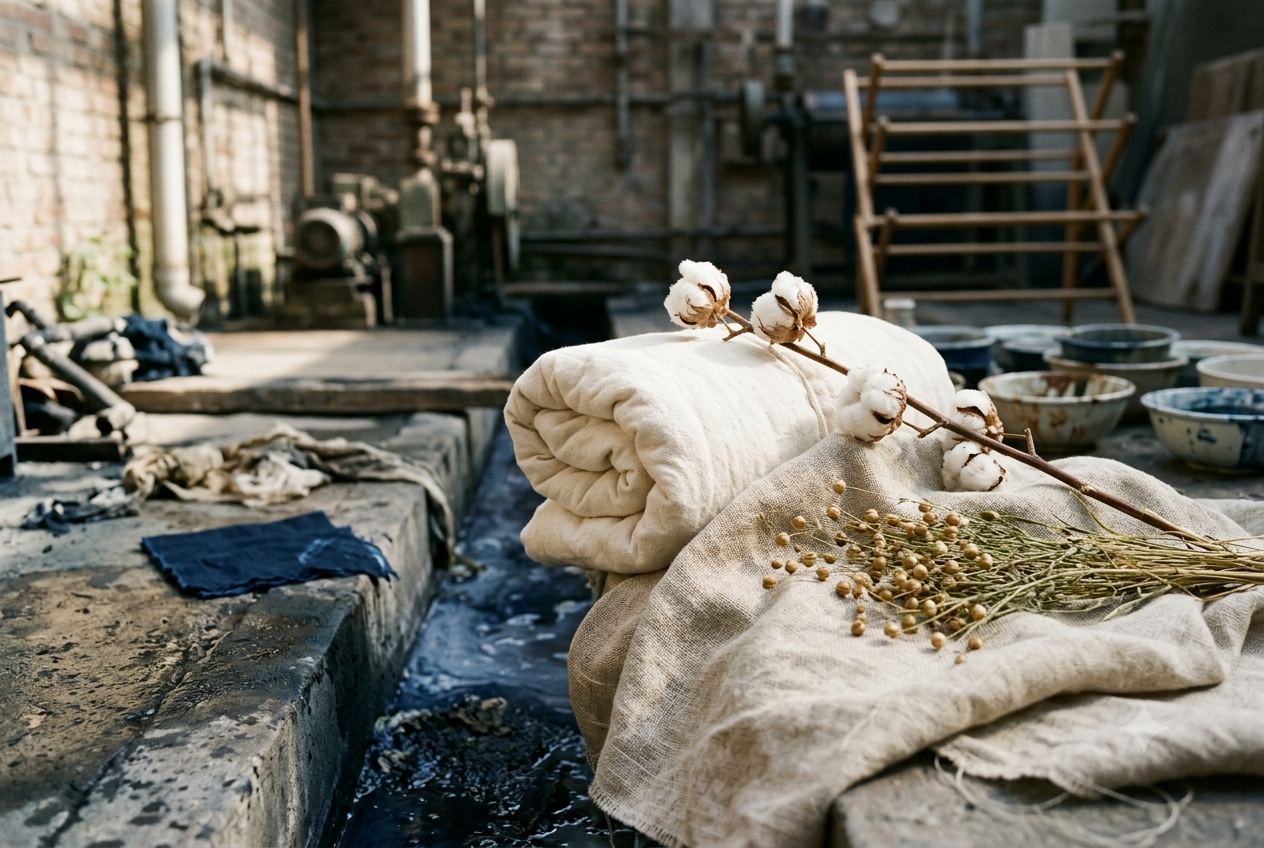
A cotton shirt feels breathable against the skin. A linen dress evokes effortless summer dressing. A garment made with natural dyes seems closer to nature than one produced using synthetic chemicals. For consumers trying to make responsible fashion choices, these materials appear to offer an easy answer to an increasingly complicated question: What should we wear if we want to reduce our environmental impact?
But the relationship between natural fabrics and sustainability is not as straightforward as it appears.
Cotton requires land, water and agricultural inputs. Linen begins with flax, but its environmental footprint also depends on cultivation, processing and transportation. Natural dyes can offer valuable alternatives to certain conventional dyeing methods, yet their environmental performance depends on the plants used, the extraction process and the treatment of wastewater. Even a fabric with an impressive environmental story can become part of an unsustainable product if the garment is poorly made, rarely worn or quickly discarded.
For consumers and fashion businesses alike, the lesson is simple: A natural fiber is a material category, not a guarantee of environmental responsibility.
The Natural Fiber Myth
Natural fibers come from plants or animals. Cotton, flax-derived linen, hemp, wool and silk are familiar examples, each with different physical properties and production requirements. Their renewable origins can offer advantages over materials derived from fossil fuels, but renewable does not automatically mean low impact.
Consider cotton. Conventional cotton cultivation can require substantial irrigation in water-stressed regions and may involve pesticides and fertilizers. Its environmental performance varies according to the climate, farming methods, soil conditions and agricultural inputs involved. Organic cotton can reduce reliance on certain synthetic agricultural chemicals, but it does not eliminate water use, land requirements or the impacts of spinning, dyeing and garment manufacturing.
Linen, produced from flax, is often associated with summer clothing and a relaxed aesthetic. Flax can grow with comparatively modest irrigation in suitable regions, although conditions differ by location. The environmental benefits of the crop can also be affected by retting, fiber extraction, processing, finishing and transport.
Wool and silk present different considerations. Wool production involves livestock, land management and associated greenhouse gas emissions. Silk requires raising silkworms and processing their cocoons. Neither material can be assessed accurately through the word "natural" alone.
Life cycle assessment studies reinforce this point: Environmental impacts differ across fibers and across stages of production, from agriculture to dyeing. No single fiber performs best across every environmental measure.
The more useful question, therefore, is not whether a fiber is natural but how it was produced, processed, used and ultimately managed at the end of its life.
Organic Does Not Mean Impact-Free
Organic cotton is an important option for brands seeking to improve agricultural practices and provide greater supply chain accountability. However, the term should not be treated as shorthand for a completely sustainable garment.
Organic certification generally focuses on defined requirements for agricultural production and supply chain handling. It does not automatically establish that every subsequent stage, including dyeing, finishing, sewing, packaging and shipping, has a minimal environmental footprint.
The same principle applies to other preferred materials. A fabric made from a responsibly cultivated crop can still undergo resource-intensive processing. A product may contain certified organic fibers while incorporating conventional fibers, synthetic sewing threads, elastic or other components that complicate its environmental profile.
For fashion brands, this makes precise sourcing information particularly valuable. Businesses should communicate what is certified, which components are covered and what the certification actually verifies. Consumers should look beyond a leaf symbol or a reassuring product description to understand what the claim means.
Sustainability is a chain of decisions, not a single attribute acquired when a fiber is harvested.
The Hidden Impact of Dyeing and Finishing
A fabric's environmental footprint is shaped by more than its raw material. Textile processing can be equally important, particularly when it involves bleaching, dyeing, washing and chemical finishing.
Conventional wet processing may consume significant quantities of water and energy. Depending on the chemicals used and the quality of wastewater treatment, it can also generate pollution that affects surrounding communities and aquatic ecosystems. The United Nations Environment Programme identifies wet processing, synthetic fiber production and consumer laundering among important environmental pressure points across the textile value chain.
This is where traditional textile knowledge becomes especially relevant.
India has a rich history of plant-based dyeing, including the use of indigo and other natural color sources. Traditional printing practices such as Ajrakh and Bagru demonstrate how regional materials, specialized skills and generations of craft knowledge have shaped textile production. These traditions offer valuable opportunities for contemporary designers seeking distinctive materials and more transparent production stories.
However, natural dyes are not automatically harmless. Cultivating and harvesting dye plants requires resources. Extracting color may consume water and energy, while some processes use mordants or other substances to help dyes bond with fibers. Poorly managed effluent can still create environmental problems.
The better comparison is between documented production processes, not simply between the words "natural" and "synthetic." A well-managed conventional dyeing operation with effective wastewater treatment may outperform a poorly managed natural dye process in certain respects. The result depends on the specific dyes, auxiliaries, energy sources, water use and treatment systems involved.
For brands, the opportunity lies in investing in cleaner processing, responsible chemical management, wastewater treatment and traceable craft partnerships rather than relying on the appeal of natural color alone.
Durability: The Sustainability Factor Consumers Can Feel
Environmental responsibility is also determined by how long a garment remains useful.
A well-constructed cotton shirt worn for years may provide better value in material use than a low-quality shirt that loses its shape after a few washes. A linen garment that can be repaired and worn across multiple seasons may remain useful far longer than a trend-driven item purchased for a single occasion.
Fiber type influences durability, but fabric construction, yarn quality, finishing, stitching, fit and care also matter. Even fabrics made from the same fiber can perform differently depending on how they are manufactured.
This is particularly important in a market where sustainability messaging often concentrates on raw materials while overlooking product longevity. A garment made from a preferred fiber is not necessarily a responsible purchase if it is uncomfortable, difficult to care for or unlikely to survive regular wear.
For consumers, practical questions can reveal more than a vague environmental claim. Is the garment well stitched? Can it be washed without special treatment? Will its shape and color last? Can a damaged seam be repaired? Is the design versatile enough to remain relevant beyond one season?
For brands, durability should be treated as a design objective. Strong construction, reliable quality control, repair guidance and timeless product development can help extend a garment's useful life and reduce the need for frequent replacement.
Kshipra Kulkarni is a freelance writer, textile specialist, and fashion educator based in India. With a background in Textile Science and Apparel Design and experience in editorial writing, content creation, and digital communications, she explores the intersections of fashion, sustainability, culture, and lifestyle. Her work combines industry knowledge with thoughtful research and accessible storytelling. With over 100 published articles, she is interested in collaborating with international publications, digital platforms, and brands seeking compelling, well-researched content.

Leave a Reply